Worried about warehouse energy bills? Sustainable warehousing usually starts with lighting, the largest electricity load in Maine warehouse data. LED upgrades, zoned controls and smarter design come first.
This page sits within the wider topic of green logistics, which looks at how goods are moved and stored with less environmental impact.
| Item | Value |
|---|---|
| Indoor lighting share of electricity use in Maine warehouses | 65% |
| HVAC share of electricity use in Maine warehouses | 15% on average |
| Plug-load share of warehouse electricity use (2015 Efficiency Maine study) | 14% |
| ENERGY STAR certified office equipment versus standard equipment | 30-75% more efficient |
| Energy use of LEED-certified buildings | 25% less energy |
| Prologis buildings with LED lighting, end of 2018 | 27% |
The figures come from Efficiency Maine’s warehouse page and a Supply Chain Dive report published March 5, 2019. They can change, so check the sources before you rely on them.
Where does a warehouse use its electricity?
Warehouses are large spaces with lighting and heating requirements, so energy costs can be significant, as Efficiency Maine points out. In its Maine data, indoor lighting accounted for 65% of warehouse electricity use, while HVAC averaged 15% and plug loads, in a 2015 study, represented 14%.
Your own split will differ with climate, refrigeration and equipment, so measure before you spend. The Supply Chain Dive report describes submeters that can monitor refrigeration units, machinery and other equipment for usage and energy savings. Sensors can also track lighting needs and room occupancy.
Lighting upgrades: LED, controls and daylight
Lighting is a primary driver of a facility’s electrical load, according to a Prologis ESG executive quoted by Supply Chain Dive. The same report says LED lighting is the main sustainable upgrade for preexisting buildings.
Prologis, a warehouse developer, is a useful example of how fast this can move. As of the March 2019 Supply Chain Dive report, it had efficient lighting in 88% of its portfolio and LED in 27% of its buildings at the end of 2018, with a goal of 100% LED lighting by 2030. Treat that as a snapshot of one company, not a benchmark for your site.
For the equipment itself, Efficiency Maine lists incentives for interior and exterior high-efficiency lighting, including:
- LED retrofit kits for existing fixtures
- New LED fixtures
- Exterior lighting, such as parking lot and wall-mounted flood lights
Controls and daylight add to the savings. Daylighting tubes channel outside light indoors, and each tube can reduce or eliminate artificial light use during the daytime hours, according to Supply Chain Dive.
Heating, cooling and airflow
On average, HVAC systems account for 15% of electricity use in Maine warehouses, says Efficiency Maine. Controls that allow zone-by-zone temperature control can reduce energy costs and keep staff comfortable, because heating and cooling reach only the areas that need them.
Airflow can help too. Some warehouses find that high volume low speed (HVLS) fans move cool or warm air efficiently around the room while decreasing energy use, according to Supply Chain Dive.
If you manage an older building, the same report suggests a thermographic inspection, an infrared imaging technique that identifies uncontrolled heat gain or heat loss. It can scan these parts of the building:
- Doors
- Walls
- The roof
Roofs, solar and site choices
A cool roof is one way to lower the temperature inside a warehouse. Supply Chain Dive notes it can be done with light-colored reflective materials or even white paint, and it also helps with the urban heat island effect.
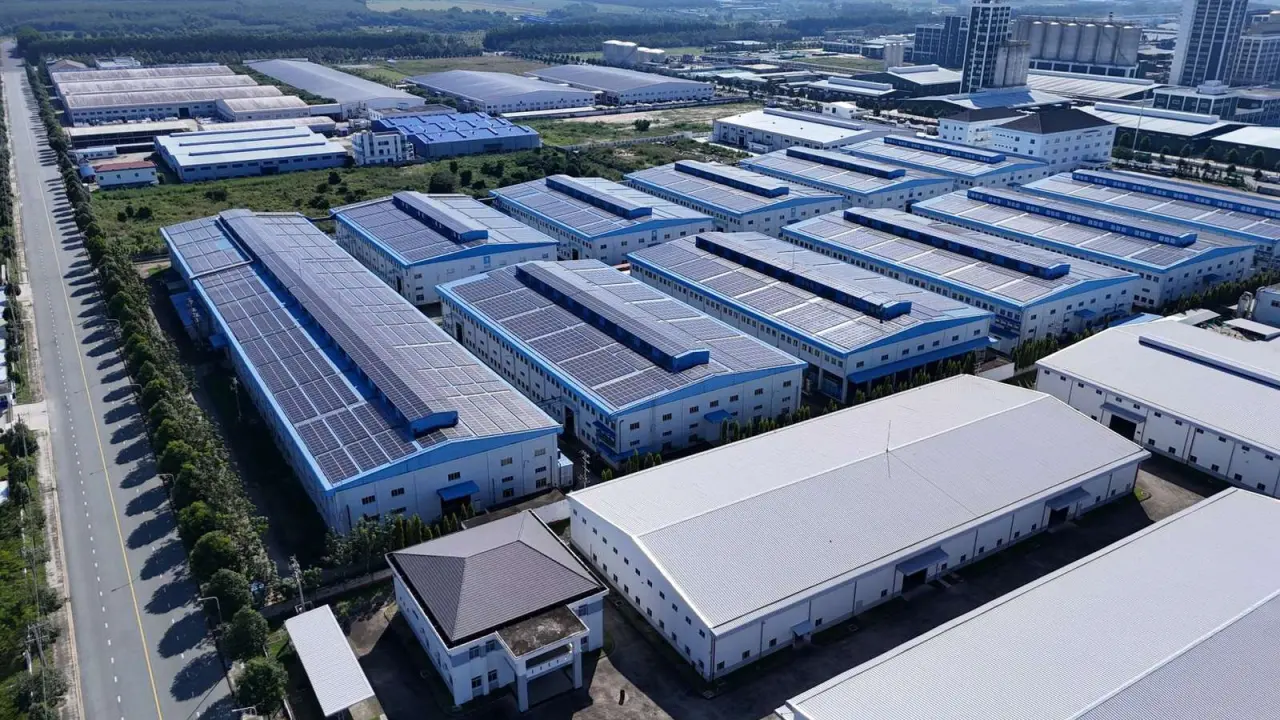
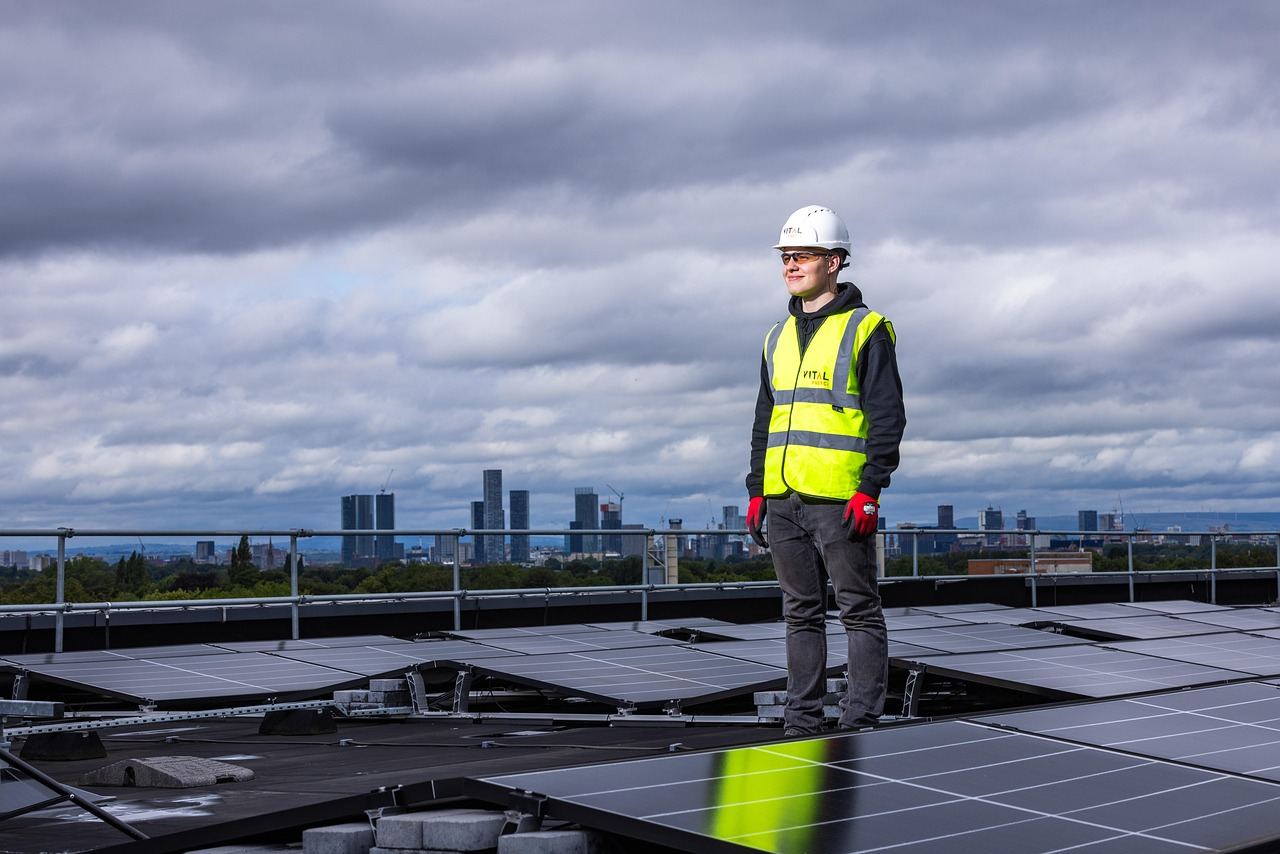
Roofs can also hold solar panels. The same report says some Prologis facilities have panels producing 186 megawatts of capacity across their global portfolio, enough to power 27,500 average-sized homes annually, and that third parties can install panels to cut the cost to the tenant or owner.
Location matters as well. Supply Chain Dive, citing the U.S. Green Building Council, says buildings use 41% of the energy in the U.S. and 29% is used for transportation. It adds that tenants want distribution centers near urban zones to minimize transportation in and out of the building.
The vehicles that serve the site matter too, and a guide on route optimization reduce emissions covers that side of the operation. To compare how freight travels, you can read about shipping emissions by transport mode.
Water is a smaller but real lever. The U.S. Green Building Council figures cited by Supply Chain Dive say buildings use about 14% of potable water in the U.S., and water-efficient measures can lower that usage by 15% and costs by 10%. Options include rainwater harvesting, low-use plumbing fixtures and water sensors.
Plug loads and equipment
According to a 2015 study, plug loads represented 14% of electricity consumption in warehouses, Efficiency Maine reports. Smaller habits add up across a large site.
- Choose ENERGY STAR certified office equipment, which Efficiency Maine says is 30-75% more efficient than standard equipment.
- Look at specialized equipment such as electric forklifts for ways to reduce plug-load demand.
- Power down equipment when it is not in use, where that is practical.
Do green certifications and incentives pay off?
Certification gives structure. Supply Chain Dive reports that LEED-certified buildings use 25% less energy, have 34% lower carbon dioxide emissions and consume 11% less water. It also cites a Harvard School of Public Health study finding that workers in green building conditions performed better.
The same report says some communities offer tax incentives for green features, and Prologis says customers and investors want them. Because sustainable features are built into its designs, the company says there is no additional significant cost to make a building green.
Utility incentives are another route. Efficiency Maine says you must work with one of its Qualified Partners to be eligible for its incentives, and it also offers custom incentives for site-specific projects such as building envelope upgrades. That is a Maine program, so check which schemes exist where you operate.
Frequently asked questions
What is the best first step toward a more sustainable warehouse?
Show answer
Start by finding out where your power goes. In the Maine data from Efficiency Maine, indoor lighting was the largest share at 65%, which is why LED upgrades and controls are a common first move.
Do you need a new building to make a warehouse sustainable?
Show answer
No. Supply Chain Dive says warehouses can be designed with sustainable practices in new construction or through retrofitting, and that it is not an all-or-nothing approach.
Can a cool roof help in every climate?
Show answer
The source describes cooling and heating systems as not needed in every climate or season, so the benefit depends on your location. A cool roof reflects sunlight rather than absorbing it, as Supply Chain Dive explains.
Can you rely on the Maine figures for your own site?
Show answer
Treat them as a guide, not a forecast. They describe Maine warehouses and a plug-load study from 2015, so measure your own building and check the original Efficiency Maine page.