Sent something back and wondered where it goes? Reverse logistics is the process of moving goods from you back to the seller, where each item is inspected, then restocked, repaired, resold, recycled or disposed of.
Returns are one piece of the wider topic of green logistics, where the aim is to keep products and materials in use for as long as possible.
| Item | Value |
|---|---|
| Worldwide value of returns in 2022 | $1.8 trillion |
| Year the term “reverse logistics” was first used in a publication | 1992 |
| Times an asset may be moved during the reverse cycle | More than seven |
| Landfill share some manufacturers claim | As low as 1% of product weight |
| Stages in a standard reverse workflow | Five |
These figures come from ReturnPro and the National Retail Federation. They can change, so check the sources before you rely on them.
What reverse logistics covers
ReturnPro defines reverse logistics as the supply chain process of moving goods from the end customer back to a seller or manufacturer for return, repair, reuse or recycling. The National Retail Federation puts it more broadly: everything that happens after the sale, or to unsold products, falls under it. You can read both descriptions in the NRF resource page.
The idea is older than online shopping. ReturnPro notes that the term was first used in a 1992 publication by James R. Stock for the Council of Logistics Management, and that it has since grown from an academic concept into a core business function (ReturnPro guide).
Returns are only one of the flows. Claimlane’s overview lists several that most retailers run at the same time:
- Customer returns: items sent back because of fit, a change of mind or a wrong item.
- Warranty returns and repairs: faulty products sent back for repair, replacement or refund.
- Product recalls: unsafe or non-compliant products pulled from the market.
- Supplier and business-to-business returns: goods sent back up the chain for a credit note.
- Unsold and overstock goods: seasonal leftovers moved on for resale, outlet sale or donation.
- Packaging returns: reusable crates, pallets and shipping packaging.
- End-of-life recycling: products that cannot be reused or resold.
How the reverse logistics process works
ReturnPro describes a standard workflow that moves through five stages: return initiation, receiving and grading, routing, repair and refurbishment, and final disposition through resale or recycling. In plain terms, it looks like this:
- Initiate the return. The buyer asks to send an item back, usually through a self-service portal. A good portal verifies the purchase, checks the return policy and issues a shipping label automatically.
- Receive and grade. At the warehouse, staff inspect each item and sort it by condition.
- Route. Items are sent to the destination that keeps waste low.
- Repair or refurbish. Items that can be restored are fixed, cleaned or repackaged.
- Final disposition. What is left is resold or recycled.
A simple example from Claimlane shows the same path: a customer orders a jacket, it doesn’t fit, and they start a return through the store’s returns portal. The retailer approves it, the jacket is checked at the warehouse, and it is restocked if it is in sellable condition.
Where do returned goods end up?
The NRF explains that the review begins with triage, generally at the point of return, though it may be outsourced. The options it lists are:
- repair and return to the user;
- return to stock, when no issue is found;
- repair and refurbish;
- send to salvage.
Each option may involve different service providers and practices. The NRF also says an asset may be moved more than seven times during the reverse cycle, sometimes overseas and back in containers (NRF).
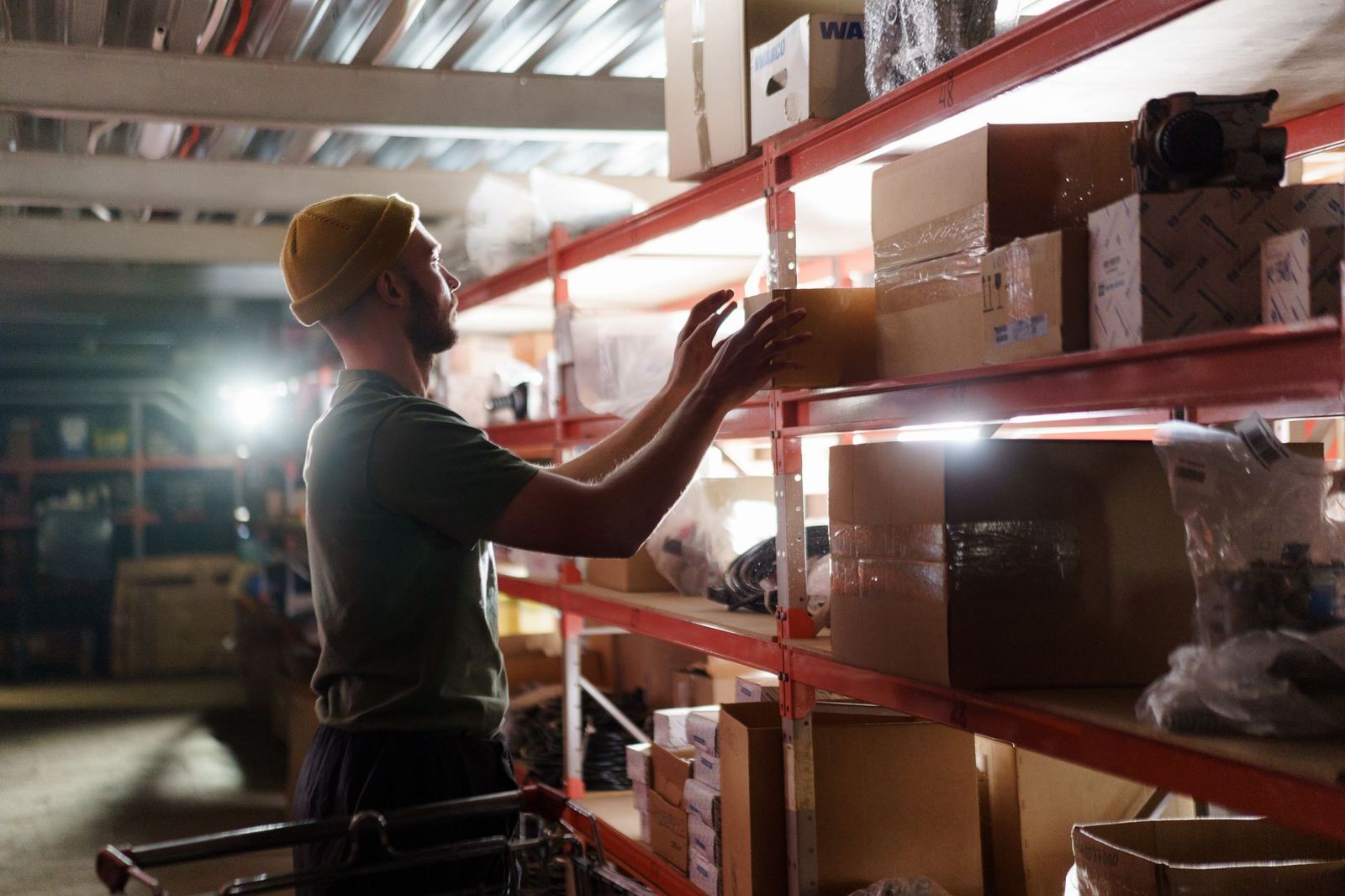
Once an item has been repaired or refurbished, it can be resold through the secondary market. The NRF notes that liquidators often act as intermediaries, and that the secondary channel may be responsible for product support and warranty on refurbished goods.
At the end of a product’s life it can be harvested for parts, re-purposed or recycled. The NRF describes the industry goal as eliminating landfills, and adds that some manufacturers claim landfill usage is as low as 1% of product weight. Treat that as a manufacturer claim, not a guarantee.
Reverse logistics versus inventory disposition
The two terms are often used as if they mean the same thing. Racklify separates them: reverse logistics is the end-to-end capability that moves goods back into the supply chain, while inventory disposition is the decision-making layer that determines where those items end up.
Take a returned headset. Reverse logistics arranges the pickup and moves it to a returns hub, then a technician inspects it. Disposition rules classify the unit as “resell” if it is undamaged, “refurbish” for a minor defect, or “recycle” if the battery is damaged.
The split matters because the two sides are measured differently, according to Racklify:
- Reverse logistics metrics focus on transit time, return processing time and transportation cost.
- Disposition metrics focus on recovery rate, write-offs and compliance incidents.
Racklify also points out that optimizing carrier routing and consolidation reduces overall return cost when transport dominates. The guide on route optimization reduce emissions covers that routing side in more detail.
Why returns matter for waste and cost
The scale is large. ReturnPro reports that returns doubled in less than ten years, reaching $1.8 trillion in 2022 (ReturnPro). Claimlane puts ecommerce return rates at around 17%, which is why it calls returns a core operational function (Claimlane).
Handled badly, returns cost money. The NRF warns that an inefficient return, refurbishing or reselling process can mean significant financial losses, including increased operating costs and inventory write-offs.
Regulation shapes some flows too. Claimlane says that in the EU, WEEE rules make take-back a legal duty for many sellers of electronics, so an old laptop handed in at the shop goes to a certified recycler who recovers usable parts and raw materials. Check the rules for your own country and product before assuming they apply.
Returns also travel. Because returned goods move by transport like any other freight, the guide to carbon neutral shipping is a useful companion for thinking about the emissions of those trips.
Frequently asked questions
What is reverse logistics in simple terms?
Show answer
It is the movement of goods from the customer back to the seller or manufacturer for return, repair, reuse or recycling, as ReturnPro defines it.
What happens to a returned item after inspection?
Show answer
According to the NRF, triage options include repair and return to the user, return to stock, repair and refurbish, or send to salvage.
Is reverse logistics the same as inventory disposition?
Show answer
Not exactly. Racklify describes disposition as the decision layer that routes an item to resale, refurbishment, recycling or disposal, while reverse logistics handles the physical movement behind those decisions.
Why can returns be so costly for retailers?
Show answer
The NRF says an inefficient process can cause financial losses through higher operating costs and inventory write-offs. Items may also be moved more than seven times before they reach their final destination.