Wondering whether that parcel at your door costs the planet more than a trip to the shop? The environmental impact of online shopping depends on how you shop: bundled, slower deliveries often beat driving, while rushed single orders often don’t.
This guide is part of our wider look at sustainable ecommerce, where we weigh up the everyday choices behind buying things.
| Comparison | Finding |
|---|---|
| Fully online shopper vs multi-visit store shopper (MIT study, published 2013) | Almost two times smaller carbon footprint |
| UK bricks-and-clicks order vs bricks-and-mortar purchases (2020 study) | Lower than 63 percent of in-store purchases |
| UK bricks-and-clicks order vs pure-play online purchases | Lower than 81 percent of pure-play purchases |
| Electric cargo bikes replacing delivery vans for pure-play parcels | 26 percent drop in emissions |
| Walking or biking to the store instead of driving | 40 percent lower emissions |
These figures come from EDF Business and Inverse. Research on this topic keeps being updated and the numbers can change, so check the source before you rely on them.
Is online shopping worse than stores? What the research shows
An early and much-cited comparison came from the MIT Center for Transportation & Logistics, summarised by EDF Business in a piece published on December 21, 2013. It found that shoppers who complete every step of a purchase online, called Cybernauts, had a carbon footprint almost two times smaller than traditional shoppers who make multiple visits to a store to evaluate, purchase and return items.
Packaging and delivery emissions did not outweigh the impact of customers travelling to the store and back. Those benefits were eroded, however, when customers used rush delivery or picked up and returned items in person.
Where you live also mattered. The study’s summary says the farther you are from a physical store and the less efficient your transport, the better off you are buying online.
A UK study published in the journal Environmental Science & Technology in 2020 added more detail. It examined three ways of buying everyday goods such as toiletries and cleaning supplies:
- Bricks and mortar: purchases made in a physical store.
- Bricks and clicks: items bought online from a physical store, then shipped to the buyer.
- Pure play: items bought online from a non-store supplier, with orders filled from large warehouses.
Pure play had the heaviest footprint and bricks and clicks the lowest, with in-store shopping in between. A bricks-and-clicks purchase was more eco-friendly than 63 percent of in-store purchases and 81 percent of pure-play ones.
Why the last mile matters most
Researchers cited by Yahoo News found that the most significant environmental impact is likely to arise when goods make their final journey from the store or warehouse to your home. For physical retailers, the biggest variables are the stores’ energy use and how customers travel there.
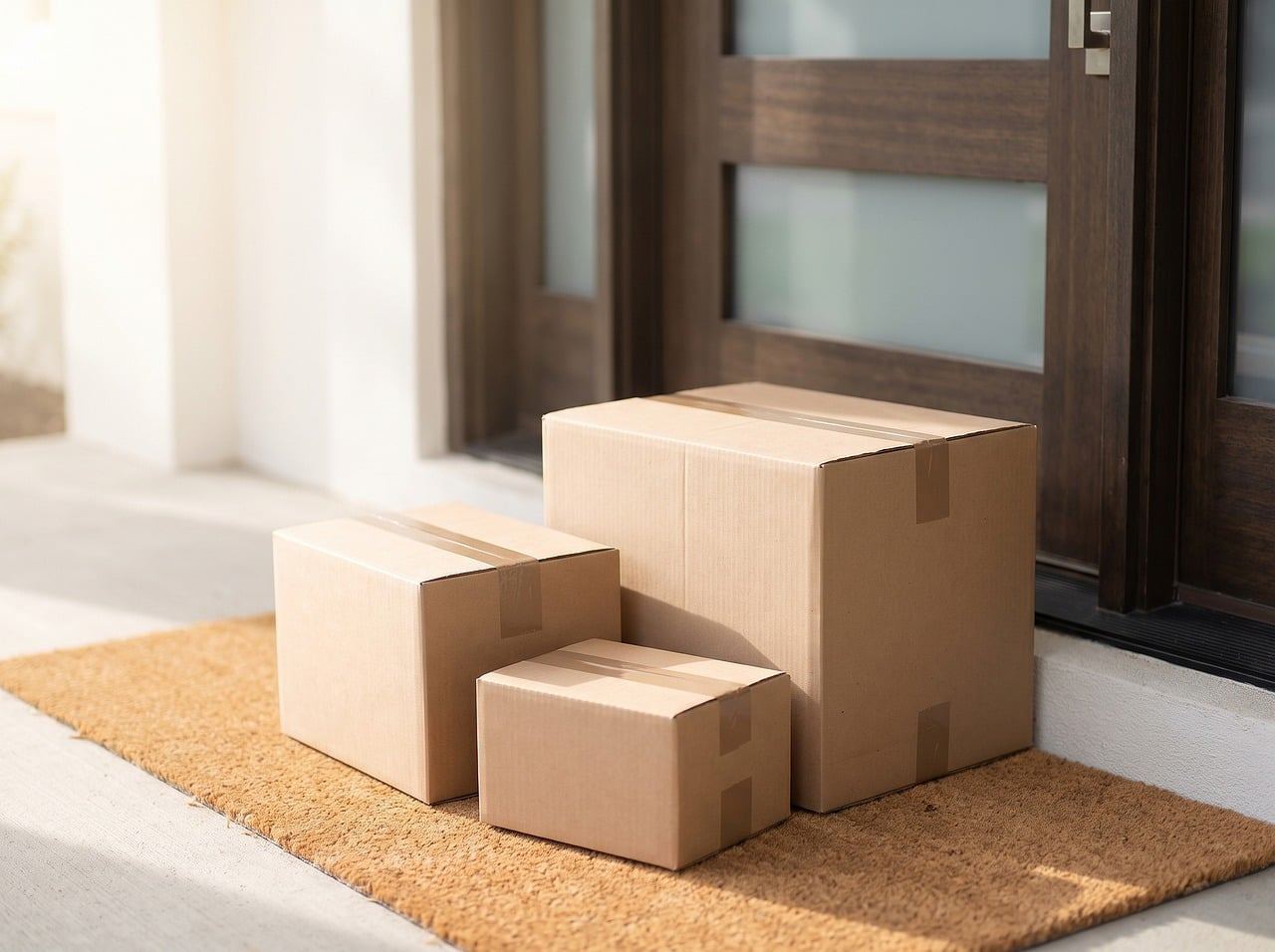
According to Yahoo News, the UK study’s authors estimate that, looking at the last mile alone, a bricks-and-clicks order produces half the emissions of going to the store, and less than one-fifth of ordering from an online-only retailer. A van that delivers many people’s orders can cover fewer miles than every customer driving separately. In the US, 95% of shopping trips are made by car, which is why delivery often wins there.
That advantage depends on how people travel. In China or the Netherlands, where most shopping trips are on foot or by bike, the bricks-and-clicks method doesn’t cut emissions compared with going to a physical store, and may be more carbon-intensive.
The number of items also matters. In the researchers’ words, the more items you buy in one go, the less impact you will have per item purchased.
Retailers can change the picture too. Swapping delivery vans for electric cargo bikes could cut emissions from pure-play parcel delivery by 26 percent, according to the study as reported by Inverse.
When online shopping loses its edge
The same coverage notes that most studies agree buying only from online-only retailers is often the most carbon-intensive choice, especially with next-day delivery. Retailers that prioritise speed over efficient routing may send more back-and-forth journeys between warehouse and doorstep.
Failed delivery attempts add trips for a single item, and smaller, more frequent orders mean more packaging. Items that come back make it worse: the return rate for clothing bought online is a lot higher than for clothes bought in store, which can increase the carbon footprint.
Our guide to ecommerce returns environmental impact goes deeper on why sending items back can change the picture.
The UK study also had limits. It did not factor in the greenhouse gases from buildings, employees and retail technology such as data centers, and it did not include returns or lost packages.
Why headline numbers disagree
You may see bold claims in either direction. In March 2024, Renewable Matter reported on research from Netcomm and the Politecnico di Milano claiming that the impact of online shopping was as much as 75 percent less than in-store shopping.
The outlet’s review found important limits. The research looked only at the emissions generated by the last mile delivery phase, built its own model rather than using Life Cycle Assessment, and excluded warehouse emissions while counting all store impacts against in-store shopping. A sustainability metrics expert quoted there said results not based on a life-cycle approach should not be considered reliable.
A study reported by Earth.com shows how much the answer varies by product. Covering China from 1990 to 2023, it found:
- Online shopping produced the larger share of emissions for necessities (roughly 60 percent) and textiles (77 percent).
- In-store shopping produced the larger share for foodstuffs, at about 74 percent.
- Packaging alone contributed 54 percent of online emissions for necessities and 70 percent for textiles.
The same research found that estimates rose roughly 50 percent to 400 percent compared with an earlier, more limited calculation method. The lesson is that method and scope shape the result, so treat any single percentage with caution.
How to shop with a smaller footprint
The research points to a few habits that shift the balance, whichever way you buy:
- Bundle your orders. Buying multiple products from the same supplier at once lowers the footprint per item.
- Skip rush delivery. Choose the ground option and leave enough time, as EDF advises.
- Avoid buying with a return in mind. Returns erode the benefit of shopping online.
- Walk, bike or share the trip if you do go to the store. Walking or biking instead of driving cuts emissions by 40 percent in the UK study, and combining errands, called trip chaining, saves a round trip.
- Consider pickup if you live in a dense urban area, as EDF suggests for store orders.
If you want to question buying new at all, our explainer on what is recommerce looks at resale as another route.
Neither study examined how products are made or how households use and dispose of them, so delivery is only part of the full footprint.
Frequently asked questions
Is online shopping better for the environment than going to a store?
Show answer
It depends. Research summarised by EDF found that a shopper who does everything online can have a much smaller footprint than one who makes several store trips, but rush delivery and returns erode that benefit.
Does next-day delivery make a difference?
Show answer
Yes. Researchers quoted by Yahoo News say ordering next-day raises the chance that an online order is a carbon-intensive option compared with allowing more items to be delivered together.
Is it better to walk to the store than drive?
Show answer
For in-store shopping, yes. The UK study found that walking or biking instead of taking the car cuts emissions by 40 percent.
Why do studies reach different conclusions?
Show answer
They measure different things. Some cover only the last mile, some leave out returns or building energy, and shopping habits differ by country, so results are not directly comparable.