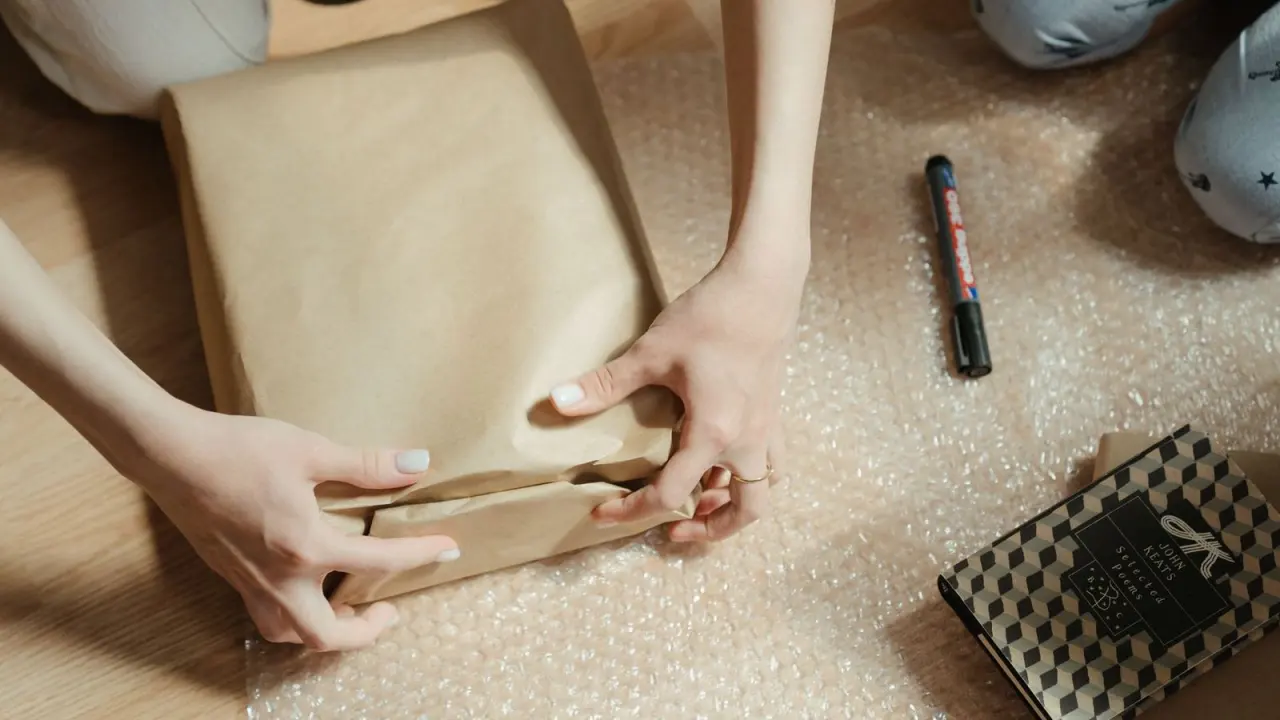
Want plastic free packaging that genuinely works? You have real options: paper, fibre, reuse and refill systems. None is perfect, so the best choice depends on sourcing, coatings and local recycling or collection.
If you are new to the wider topic, start with what is sustainability for the bigger picture behind these packaging choices.
| Item | Value |
|---|---|
| Shoppers avoiding heavily packaged products | 44% most or all of the time in 2021, up from 39% in 2019 |
| Size of that shopper survey | 24,000 people in 24 countries |
| Criteria set for paper-based flexible packaging | Six: sourcing, production, performance, local recyclability, chemical safety and biodegradability |
| Unilever paper-based flexibles commitment | Around 10-15 kilotons by the end of 2028 |
| Small-format flexible plastic units leaking into oceans | Around 25,000 every second |
These figures come from the Ellen MacArthur Foundation’s article on plastic packaging avoiders and Packaging Europe’s August 2026 report on the paper transition. Figures can change, so check the source before you rely on them.
What does plastic free packaging actually mean?
Swapping one material for another is only part of the job. The Ellen MacArthur Foundation describes a circular economy for plastics built on three principles, and the first one is to remove packaging you do not need.
- Eliminate the plastics we do not need.
- Innovate so the plastics we do need are reusable, recyclable or compostable.
- Circulate everything we use.
The hardest cases are small flexible formats. Sachets, wrappers and pouches are believed to be the fastest-growing type of plastic across the world, according to Packaging Europe’s March 2026 coverage of a Foundation report.
Paper and fibre alternatives
Paper is the most discussed replacement for flexible plastic. The same Foundation report says paper-based packs can more easily be designed for recyclability and biodegradability, which matters where flexible packaging tends to end up in the environment.
Plastic does some jobs that paper cannot do on its own. Paper typically needs coatings, barrier layers, adhesives and inks to match the moisture resistance, grease resistance and shelf-life of plastic, and all of that must be added without losing recyclability, as Packaging Europe reported in August 2026.
The fibre itself is changing too. Innovators are said to be moving from virgin wood to agricultural residues and other non-wood sources with significantly lower land use and biodiversity impacts, according to the same August 2026 report.
Because the coating decides whether a paper pack can actually break down, it helps to understand biodegradable vs compostable claims before you trust a label.
Why paper is not automatically the greener choice
The Foundation warns that paper packs offer little to no environmental benefit if they are not responsibly sourced or produced. In that case the switch could add to forest degradation and pressure on water and climate, as Packaging Europe noted in March 2026.
What happens at the end of life also changes the result. The Foundation’s Laura Smith said that in regions where waste is primarily burned, paper flexibles may have a lower carbon footprint than plastic equivalents, whereas in unmanaged landfill paper-based packaging may release methane and lead to higher emissions than plastics (Packaging Europe, March 2026).
To keep the switch honest, the report sets out six criteria for responsibly designed paper flexibles. The report has been endorsed by 44 businesses, NGOs, investors and academics, per the same March 2026 article.
- Sourcing
- Production
- Performance
- Local recyclability
- Chemical safety
- Biodegradability
Most commercial-scale packaging does not yet meet all six, according to the Foundation’s own comments reported in August 2026. The same report says paper often runs more slowly through existing filling lines and, at current production volumes, costs more than conventional plastics, so progress is real but uneven.
Big brands are investing anyway. Unilever has committed to distribute around 10-15 kilotons of paper-based flexible packaging by the end of 2028, as reported in August 2026.
Reuse, refill and edible coatings
Material swaps are not the only route. Plastics strategy lead Sander Defruyt said there is no silver bullet, and that paper complements other priority solutions such as reusable packaging (Packaging Europe, March 2026).
Some start-ups go further and remove the wrapper altogether. Apeel and Mori make edible coatings for fruit and vegetables that avoid the need for any single-use plastic wrapping, as described in the Ellen MacArthur Foundation’s article.
Another point from the Foundation is that material innovation will not solve the plastic waste crisis by itself. Any substitution should come with efforts to scale effective collection and recycling systems.
How to shop for less plastic packaging
You are not alone in wanting this. A GlobeScan survey of 24,000 people across 24 countries found that 44% avoided products with a lot of packaging most or all of the time in 2021, up from 39% in 2019, as the Ellen MacArthur Foundation reported.
Fresh produce is where many people start. In a 2019 YouGov study, 81% of UK consumers said they were trying to buy less fruit and veg that came surrounded by plastic packaging, per the same article. The Foundation also cautions that “a lot” of packaging is subjective and that people can be biased in favour of their own behaviour.
A few habits follow from the evidence above:
- Choose loose produce over pre-wrapped where you can.
- Favour reusable or refillable formats over single-use ones.
- Ask what coating a paper pack uses before assuming it is compostable.
- Learn the marks on the pack, starting with recycling symbols explained, so you know what your local system can take.
Frequently asked questions
Is paper always better than plastic packaging?
Show answer
No. The Foundation says paper offers little to no environmental benefit if it is not responsibly sourced or produced, and results depend on end-of-life handling, coatings and design (reported March 2026).
Which plastic packaging is hardest to replace?
Show answer
Small-format flexibles such as sachets, wrappers and pouches. They are described as one of the most stubborn technical and economic challenges in recycling, and around 25,000 units leak into the world’s oceans every second, according to the Foundation as reported in August 2026.
Can switching to paper solve plastic waste on its own?
Show answer
No. The Foundation’s report stresses that material innovation will not solve the plastic waste crisis by itself, and that substitution should come with scaled collection and recycling systems.
Do shoppers really avoid plastic packaging?
Show answer
Many say they do. In the GlobeScan survey, 44% reported avoiding heavily packaged products most or all of the time in 2021, though the Foundation notes that self-reported behaviour can be biased.